

Tong Zhong Gong ·Internal Qigong·
A standing Qigong method that builds a calm, stable and powerful center for everyday life through simple postures, natural breathing and focused awareness. Qigong is a family of traditional Chinese practices that use gentle movement, breathing regulation and mindful attention to cultivate and balance the body’s vital energy (qi), supporting health, clarity and longevity.
Among the many Qigong systems, Tong Zhong Gong is an internal method practiced mainly in standing postures to develop deep structural alignment, inner strength and mental stillness.
It avoids acrobatics and complex choreography, focusing instead on a few precise positions, natural breathing and progressive training that can be adapted to different ages and physical conditions
Tong Zhong Gong (铜钟功, Tóng Zhōng Gōng) is a standing neigong system that uses a “bronze bell” structure to connect the whole body as one integrated unit, from the feet rooted in the ground to the crown gently suspended upward. By holding and refining these postures over time, the practitioner learns to release unnecessary muscular tension, align the joints and let internal force travel through the skeleton rather than relying on brute strength.
In this method, stillness is not passive: it is a dynamic balance where breath, posture and awareness work together to regulate qi, calm the nervous system and awaken a clear, grounded presence. This makes Tong Zhong Gong both a foundation for internal martial arts and a complete health practice on its own, suitable for people seeking better posture, more energy and emotional stability.
Training emphasizes patience and gradual progress: short daily sessions build up the ability to stand longer, feel more, and enter deeper levels of quiet power. Over months and years, practitioners often report a marked increase in physical resilience, mental clarity and a sense of inner spaciousness that carries over into everyday life.
Particularities of Tong Zhong Gong What makes Tong Zhong Gong unique?

Structure and form
Tong Zhong Gong is recognized by its “bronze bell” standing structure: feet slightly turned out, body upright, crown gently lifted, shoulders relaxed and arms open at about 45 degrees, with alive, slightly extended hands.
This creates a sense of expansion from the center toward the limbs, allowing the practitioner to train internal force in a soft but very solid way, without unnecessary muscular tension.
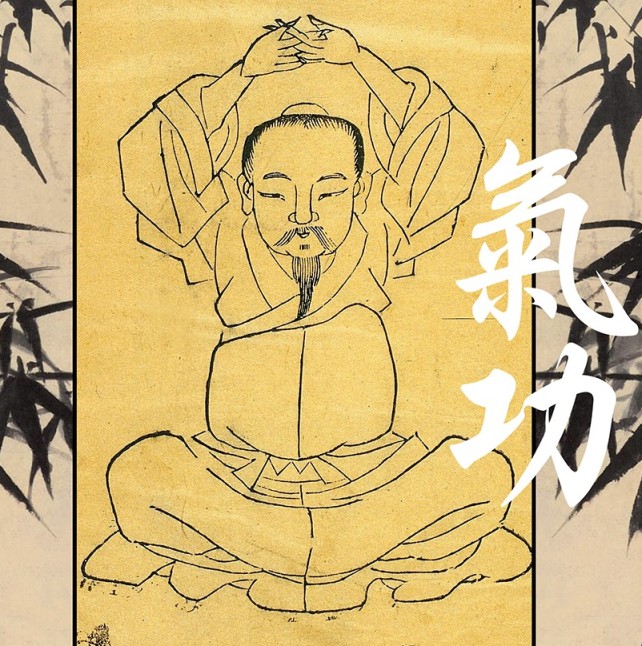
Clear and progressive method
The system is built on a small number of key standing postures and a sequence of clearly defined static and dynamic methods.
Because of this clarity, it is easy to remember, tand integrate either as a complete internal training on its own or as a complement to Taijiquan, martial arts or other Qigong routines
Roots in classical Qi Gong
Roots in classical Qi Gong
Traditionally, Tong Zhong Gong is linked to the internal work of classical Chinese qi gong, preserving both a therapeutic dimension and a martial one.
Modern sources trace its transmission through teachers such as 马有忠 (Ma Youzhong) and 蒋幼山 (Jiang Youshan), who systematized the practice while keeping its focus on deep internal development rather than external display.